About
Software an engineer can check.
You sign for the result, so you need to see how the software got there.
That is the software we want to build: every result traced back to its inputs, and checked against published benchmarks where anyone can see them.
RCL is doing that research now, starting from problems engineers actually run into. We are also looking at how AI agents can take on the routine modelling, analysis and documentation, with the engineer checking every step. Products will come out of that work, and we will announce them when they are ready.
We would rather not do this alone. We want to work with engineering offices and see the checks you run, the reports you issue and the models you pass around. If your office would like to be part of it, get in touch.
Approach
Question, prototype, verify, publish.
Question
Start from a problem engineers actually have, not from a feature list.
Prototype
Build the smallest tool that tests the idea on a real project.
Verify
Check results against benchmark problems and hand calculations.
Publish
Share findings and verification examples in the open.
People
From masonry modules to a PhD in steel.
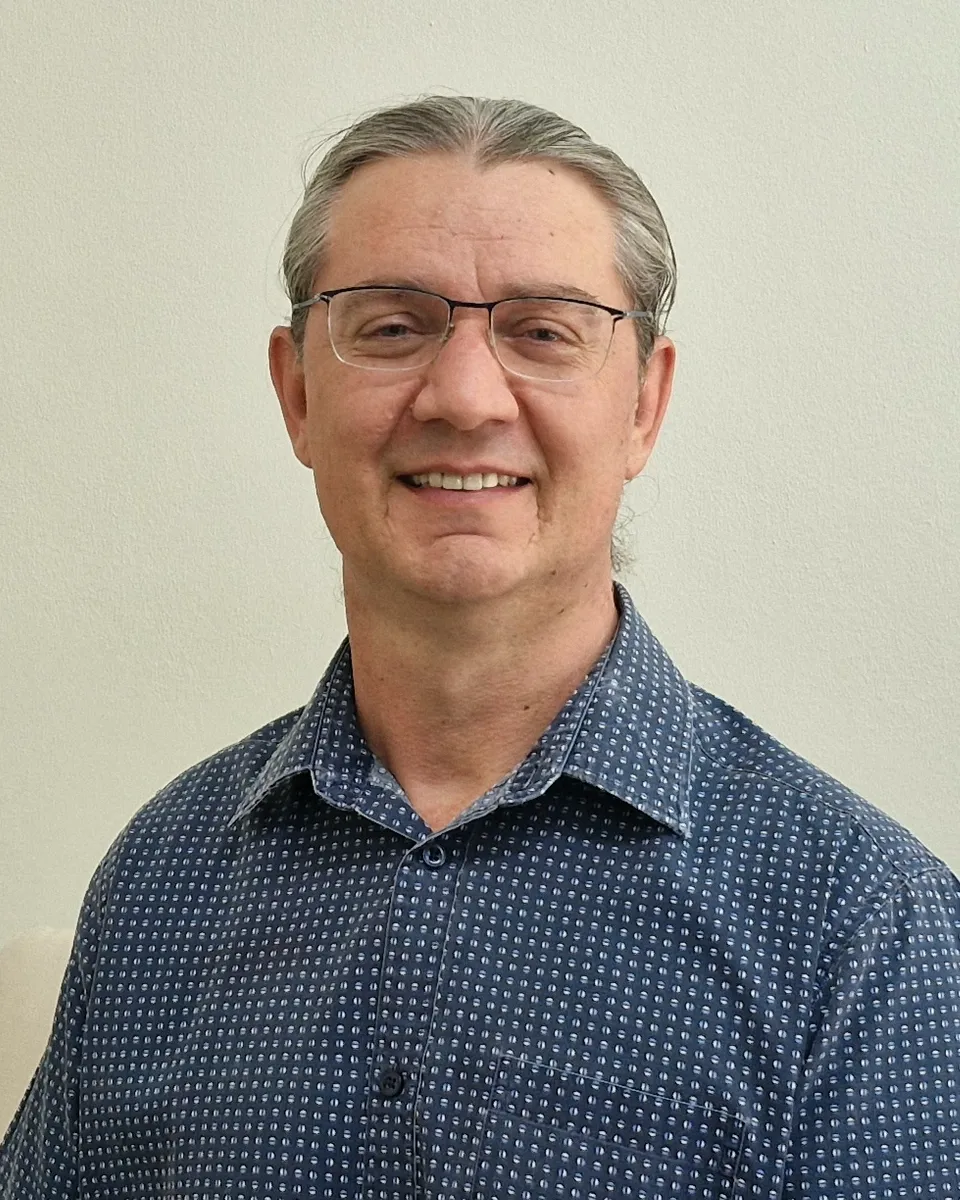
Renier Cloete, Director, in his own words.
Prokon, 2001–2026
I joined Prokon Software Consultants in 2001. My first job was the masonry design modules, and from 2008 to 2022 I was director of research and development. From 2019 I was also a director of Prokon Software Limited, in Ireland, and when it took over the software in 2022, I carried on with the work through RCL Consulting as a contracted consultant until September 2026.
For my first ten years I was also one of four people supporting the software worldwide, by email and phone, and for a while the only one. That is where I learned what engineers actually do with a calculation, and where they stop trusting it.
Until 2020 I also ran the Advanced Analysis course for practising engineers every few months: shell, solid and cable finite elements, and linear, second-order and buckling analysis.
Sumo, and the suite around it
I made the first commit to Sumo, Prokon’s 3D structural analysis and design application, in 2010, and wrote nearly all of it in the years after that. That covers the application itself, its links to every module in the design suite, its integration with IDEA StatiCa, and the Revit®–Sumo link that runs inside Autodesk® Revit® software, which I wrote and maintained until 2023.
Before Sumo, and alongside it, I worked on the suite’s Frame Analysis module: the beam element formulation, the element updates for nonlinear analysis, and recovering nonlinear stress resultants from element loads, among other things.
Structures, not only software
My PhD (University of Pretoria, 2018) was an experimental and numerical study of steel column base connections under biaxial bending. I spent four years of it in Abaqus, and the work was published in the Journal of Constructional Steel Research in 2021.
I have also designed steel, concrete and load-bearing masonry structures, and supervised construction on site, from earthworks at an iron ore mine to a house I had designed. So I know what an engineer is putting their name to when they use one of my calculations.
Engineers also call me in for the smaller investigations: cracking masonry in a house, a flat slab deflecting more than it should, vibration-induced weld cracking in a crusher plant. I am there to support the responsible engineer, not to replace them.
RCL Consulting
I registered RCL Consulting in 2015, and I have worked through it since 2022. From October 2026 it has my full attention, and it is where all of this goes next: research into software engineers can check.
RCL Consulting (Pty) Ltd
321 Olivier Street, Brooklyn
Pretoria 0181, South Africa
Reg 2015/039468/07 · VAT 4460284112

Publications
Peer-reviewed research.
Cloete, R. and Roth, C. P. (2021). Column base connections under compression and biaxial moments: Experimental and numerical investigations. Journal of Constructional Steel Research, 184, 106834.
doi:10.1016/j.jcsr.2021.106834 →Cloete, R. and Roth, C. P. (2021). Column base connections under compression and biaxial moments: Proposed design approach. Journal of Constructional Steel Research, 184, 106814.
doi:10.1016/j.jcsr.2021.106814 →Cloete, R. and Roth, C. P. (2019). Column base connections subjected to axial compression and biaxial moments. In Zingoni, A. (ed.), Advances in Engineering Materials, Structures and Systems: Innovations, Mechanics and Applications, 1213–1218. CRC Press.
doi:10.1201/9780429426506-210 →Cloete, R., Robberts, J. M. and van Rensburg, B. W. J. (2007). A simplified finite element model for time-dependent deflections of reinforced concrete slabs. Journal of the South African Institution of Civil Engineering, 49(1), 2–10, Paper 580.
PDF — open access →
Social responsibility
Software for public service.
Alongside the engineering work, we write open-source software for public institutions and give it away.
Wombat
Open source · AGPL-3.0 · C#, ASP.NET Core · In active developmentWombat handles work-based assessment for medical training, built on the Entrustable Professional Activities framework. Trainees ask for assessments, assessors complete them, and coordinators review each trainee’s portfolio across programmes and specialties. Each institution sets up its own question sets.
We chose the licence on purpose. The AGPL covers software that is hosted, not just software that is handed out, so an institution running Wombat cannot be locked out of the system that holds its assessment records. Not by us, and not by anyone who takes it over later.
github.com/RCL-Consulting/Wombat →